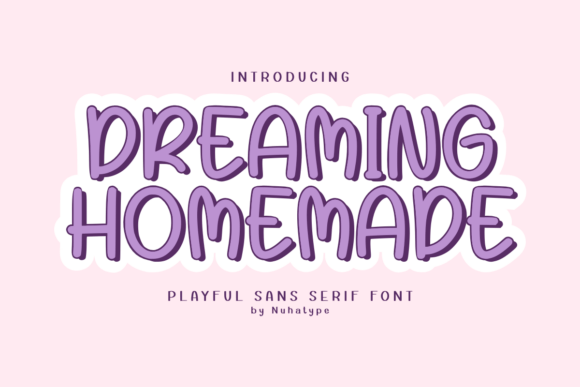
Dreaming Homemade: The Creative Font for Authentic Brand Identity
It was a Tuesday afternoon, and I was staring at a stack of empty glass jars. They were meant to hold my new line of hand-poured soy candles, but right now, they just looked like generic containers waiting for a story. The labels I had designed previously felt stiff and corporate, completely missing the warm, artisanal vibe that defined my brand. I needed something that screamed "handmade with love" without looking amateurish. That is when I decided to test Dreaming Homemade, an upbeat and expressive display font, on my product packaging.
The moment I typed out the name of my candle scent into this typeface, the entire mood shifted. The bouncy alignment and organic character proportions gave the text a warm, hand-sculpted feel that perfectly matched the natural ingredients inside the jar. It wasn't just a font; it was the voice of my business finally finding its rhythm. If you are a small business owner struggling to make your branding look polished yet personal, here is how this creative font transformed my customer-facing materials.
Why Display Fonts Matter for Small Business Storytelling
In the world of commercial font usage, many entrepreneurs make the mistake of using standard system fonts for everything from their logo to their social media graphics. While safe, this approach often leads to a brand identity that blends in rather than stands out. Dreaming Homemade falls squarely into the category of a premium display font, which means it is designed to be seen, not read paragraph by paragraph. Its primary job is to capture attention and convey personality instantly.
For a boutique or an online shop, first impressions are everything. When a customer scrolls through Instagram or walks past a shelf in a local market, they have less than a second to decide if your brand feels trustworthy. A modern typography style like Dreaming Homemade signals creativity and care. It tells the customer that you put thought into every detail, including the words on your box. This level of visual consistency builds recognition. When your website banners, thank-you cards, and product tags all share the same distinct character, you create a cohesive narrative that customers can remember.
From Packaging to Social Media: Real-World Applications
I didn't just use this typeface for the candle labels; I integrated it across my entire brand ecosystem. The versatility of Dreaming Homemade made it easy to maintain a unified look without needing a degree in graphic design. On my physical products, the font works beautifully as a headline or title. The slightly irregular edges give it a tactile quality, making the packaging feel more exclusive and crafted.
Beyond the physical goods, I applied the font to my digital assets. Creating social media graphics for my latest launch became much faster because the font carried so much weight on its own. I used it for bold headlines on Instagram posts and as the main text on my online shop banner. Because the characters have such strong expression, I didn't need to add excessive decorative elements or heavy filters. The typography itself did the heavy lifting, ensuring my promotional images looked professional and engaging.
- Product Labels: Perfect for short phrases, scent names, or ingredient highlights where you want a handcrafted feel.
- Logo Design: Ideal for creating a memorable wordmark that stands out in search results and store displays.
- Menus & Flyers: Great for café owners or event planners who want to add a touch of whimsy to their offerings.
- Thank-You Cards: Adds a personal, handwritten touch to your customer appreciation notes.
However, there is a strategic balance to strike. This is not a body text font. You should avoid using Dreaming Homemade for long paragraphs of information, such as shipping policies or detailed product descriptions. Instead, reserve it for the "hero" moments of your design—the titles, the logos, and the key messages that drive engagement.
Mastering Readability and Font Pairing
One of the biggest concerns when adopting a unique creative font is whether people will actually be able to read it. In my experience, Dreaming Homemade strikes an excellent balance between style and legibility. The organic proportions ensure that even on small mobile screens or tiny product stickers, the letters remain distinct and clear. For example, when I printed the font on my boutique tags, the text remained sharp and readable despite the small size.
To maximize its impact, pairing is key. Since this is a highly expressive display font, it needs a calm partner to ground the design. I found that pairing it with a clean sans serif font worked wonders for my informational text. The contrast between the playful, bouncy headers and the structured, neutral body text created a hierarchy that guided the customer's eye naturally. Alternatively, for a beauty brand or a wedding service, pairing it with an elegant serif font could elevate the perceived value of the product.
If you are aiming for a fully handwritten aesthetic, you might consider combining it with a simple script font for accents, though this requires careful spacing to avoid visual clutter. The goal is to let Dreaming Homemade shine as the star while the supporting typography ensures clarity. This approach helps your brand look more professional and less chaotic, which is crucial for building trust with new customers.
Technical Considerations for Commercial Success
Before downloading any typeface for your business, it is vital to check the technical details. Dreaming Homemade comes with various styles and file formats that cater to different needs. Whether you are printing large banners or designing intricate vector files for merchandise, having access to high-quality formats like OTF or TTF is essential. Additionally, checking for alternate characters and ligatures can save you hours of manual editing, allowing you to achieve smoother connections between letters automatically.
Another critical factor is multilingual support. If you plan to sell internationally or have a diverse customer base, ensure the font supports the necessary character sets. Furthermore, always review the commercial font licensing agreement. As a business owner, you need to know exactly what you are allowed to do with the design assets. Most premium fonts allow for use on products, packaging, and client work, but some restrictions may apply to resale or unlimited print runs. Understanding these terms protects your business from legal issues down the road.
Moving forward, I am confident that Dreaming Homemade will remain a staple in my design toolkit. It has helped me transition from a hobbyist selling jars of wax to a recognized brand with a distinct visual identity. For any entrepreneur looking to upgrade their brand identity and make their products feel more memorable, this font offers the perfect blend of warmth and professionalism. It proves that a little bit of artistic flair in your typography can go a long way in connecting with your audience.